
Kern County Resident Lookup Coverage
Begin with the fact you actually need to prove. The Assessor ties an address to an APN and parcel details, though its online property search hides owner names and offers no owner-name query. The Recorder indexes documents by party, number, date, and class rather than one combined property file. Courts contribute cases and registers of action. Vital records document events and relationships. Business filings and professional licenses can confirm a public affiliation without ever proving where someone lives.
The table keeps those roles distinct. Online portals are only one channel. Counter terminals, APN kiosks, mailed copy requests, the Beale Memorial Library Local History Room, and a narrow California Public Records Act request may serve when a portal stops short. Treat any result as a lead until the custodian hands over the record or explains its limits.
| Record | What It Confirms | Where | Access |
|---|---|---|---|
| Assessor and GIS | Parcel, situs, APN, assessee and value clues | Kern Assessor Property Search and Kern Interactive County Map | Online; owner names suppressed in the assessor search |
| Recorded instruments | Parties, recording date, document type and number | Kern recorded-document search and party form | Free index; copies by counter or mail |
| Court cases | Case number, party variants and register of actions | Kern Superior Court Case Information Search | Account portal; clerk terminal and certified-copy routes remain |
| Probate | Estate, heir, guardianship or conservatorship proceedings | Kern Probate | Online, counter, and mail research |
| Vital records | Birth, death, marriage or limited dissolution certificate facts | Kern Assessor-Recorder, Kern County Clerk, and CDPH Vital Records | Authorized or informational copies; confidential marriage is restricted |
| Voter status or file | Self-authenticated status or approved registration fields | California My Voter Status and SOS file request | Self-only lookup; Elections Code §2194 limits file access |
| Business and licenses | Entity, agent, filing image, license status or public discipline | California bizfileOnline and DCA license search | Free online tools; fields vary by board |
Lead with your strongest anchor. An exact APN beats a broad surname. A case number beats a common name. A dated directory entry, business filing, or license record can separate two people who share a name, yet none of them proves a current residence without separate address evidence.
Kern County Resident Lookup Identity Controls
Same-name mixups are the biggest risk in any person search. Keep middle names, initials, suffixes, former names, trust and entity names, and spelling variants close at hand. The Recorder party form takes names last-name first, allows partial searches, and lets you choose Grantor, Grantee, or either role. Type initials without periods. An entity starting with "the" is indexed without that word; ampersands are indexed while commas, dashes, and periods are not. Small rules shift the whole result set.
Before assigning a record to one person, make two independent anchors agree. Pair a case with a known age or address. Pair a directory entry with a newspaper notice. Pair a business filing with a license record. A mailing address or assessee field is a dated clue, but an assessed owner is not always the occupant. Note the source and date beside every claim.
| Sample result field | How to read it |
|---|---|
| Party name and role | Shows the indexed grantor, grantee, or both, not every household member |
| Case number and register of actions | Identifies a court matter and docket events, not the full official file |
| APN and situs | Connects a parcel to a place; it does not disclose a private occupant |
| Document date and class | Places an instrument in time and identifies its index category |
| Image or copy status | Shows whether the portal points to an image; N/A does not promise remote access |
Commercial people-finder services are a generic category, not an authority. They can blend stale or misattributed data with paid layers. When a commercial result conflicts with the custodian, keep the conflict noted and contact the office that created the official record.
Kern County Resident Lookup Court Limits
Kern Superior Court requires an online account for the Kern Court Portal. An email address serves as the login ID. The Case Information Search can surface matching case numbers, public case data, and some registers of action. Court data are informational and "as is." A clerk provides the official or certified copy. Remote public access to civil electronic documents ended in December 2023 after a security issue. So a case index does not mean every filing opens from home. The court's portal terms page explains the account and result behavior.
Public inspection continues at clerk-office terminals. Copies come by mail or at the counter. The fee schedule lists $0.50 per printed page. It costs $40 to certify a document. Searches over ten minutes run $15 per file. Off-site retrieval runs $20 per file. Sealed matters, juvenile cases, adoptions, and confidential family details follow separate rules. Federal cases belong to the Eastern District of California and PACER, not the state portal. Kern court locations lists branch contacts. The Eastern District Bakersfield location is the federal starting point for matters filed there.
Probate offers a separate route through Kern County courts. Estates, wills filed in cases, heir and creditor notices, guardianships, and related proceedings all live there. The venue is the Juvenile Justice Center at 2100 College Avenue. Smart Search, a counter visit, or a mailed request can establish a case. Then you can target a petition, order, or inventory. Ask for a specific case or document. Do not ask a clerk to identify a person from an open-ended name.
A probate file can explain why a name appears in a deed or obituary. Still, an heir named in a filing is a dated court fact, nothing more. Check the case record and its access status. Never infer a current address from an old petition, return envelope, or creditor notice.
The Kern Probate division provides the official starting point for estate and heir records.
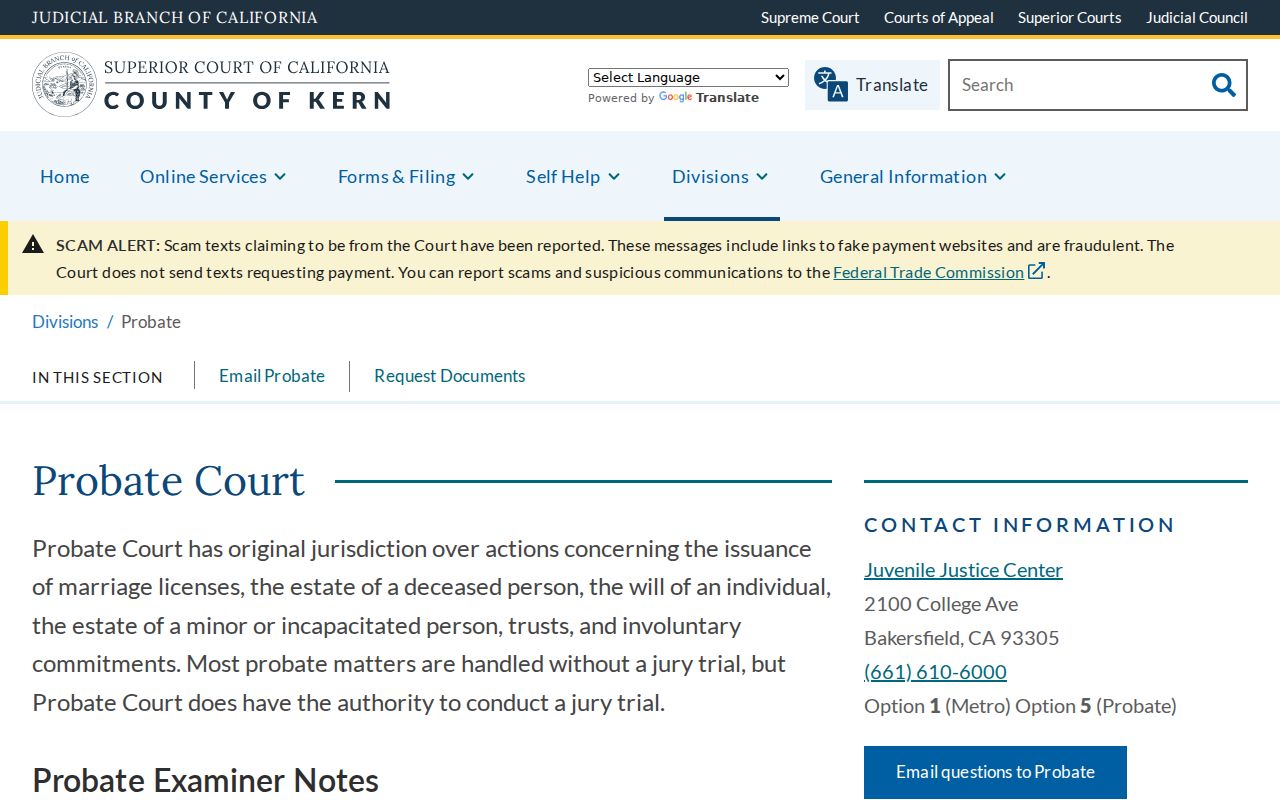
The probate route adds a court-controlled source when a name search turns toward an estate, guardianship, or named heir.
Kern County Resident Lookup Verification Steps
A disciplined sequence keeps a name search from becoming a pile of unrelated records. Start with the least sensitive fact you already hold. Write down the exact spelling, date range, community, and source. If a portal returns several people, narrow by a parcel, case, entity, or dated address. Do not grab the first familiar name.
- Write down the name variants, known community, approximate date, and the reason the record is needed.
- If an address is known, run the Assessor address search without city, ZIP, or street type. Capture the APN, situs, and parcel map.
- Use GIS to compare the parcel and legal clues. Do not treat the online assessor as an owner-name search.
- Search the Recorder party index by legal name and variants, then compare document date, role, class, and legal description.
- Open the Kern court case index or probate search for a matching case number, then use a clerk terminal or copy request for the official file.
- Use an authorized or informational vital-record route only when the eligibility and identity rules fit.
- Label the conclusion precisely: recorded party, assessed parcel, named court party, listed subscriber, or registered entity agent.
A search can still end with no match. A protected address, a renter, an unlisted subscriber, an unrecorded move, a sealed case, or a common name can all keep a real person out of the results. "Not shown" is the honest conclusion.
California Voter And Vital Checks
California's My Voter Status tool is a self-check. It asks for a first and last name, date of birth, driver license or ID details, and the last four digits of a Social Security number. It is not a public resident directory. Elections Code §2194 limits voter-file access to specific purposes. Candidates, ballot committees, government bodies, elections offices, scholars, journalists, and approved political users qualify. Personal curiosity, marketing, and harassment do not. Unauthorized publication is not a valid shortcut either.
A voter-file request sits apart from the self-check. Both the statewide file and a specific-person request carry stated costs and application limits. Sensitive identifiers and signatures stay withheld. The safest use of My Voter Status is by the person signing in. A voter record should never feed a published block list built from names.
Vital records follow a separate California model. Health and Safety Code §§103525 to 103526 split copies into authorized and informational versions. A mailed request for an authorized copy requires a notarized sworn statement. Informational copies carry a mark reading "INFORMATIONAL, NOT A VALID DOCUMENT TO ESTABLISH IDENTITY." Confidential marriages are restricted under Family Code §511. CDPH dissolution certificates cover 1962 through June 1984. They are certificates rather than divorce decrees. The CDPH copy guidance explains the eligibility split. Its vital-record fee page lists the current fees.
| 2026 certificate type | Fee and access note |
|---|---|
| Birth | $31; authorized or informational copy rules apply |
| Death | $26; eligibility and copy type matter |
| Marriage | $19; confidential marriage is restricted |
| Dissolution certificate | $18; CDPH coverage is limited to 1962 through June 1984 |
Kern Assessor-Recorder and CDPH handle the birth and death certificate paths. Marriage licensing sits with the Kern County Clerk, along with confidential marriages. A no-record search keeps its fee. It may return a Certificate of No Public Record. The application hub and current forms control live requirements.
Kern County Resident Lookup Licenses
Public business and license records can separate a person from a name twin. California bizfileOnline offers free search access to more than 17 million corporation, LLC, and limited partnership filing images. A result can show an entity name and number, formation or registration date, status, jurisdiction, street or mailing address, agent for service, and Statement of Information due date. An agent for service is not the owner. An entity address is not a residence.
Professional licensing works differently. The California Department of Consumer Affairs search is an umbrella tool, and its fields depend on the participating board. Results may include license type, status, expiration, public practice location, specialty information, or discipline records. Richer detail can sit in a board-specific system. Use the license number, public name, and date as identity controls. They do not prove household composition. Treat them as cross-checks in a resident lookup. They are not a street directory of who lives where.
California bizfileOnline Business Search shows the official state filing path for entity records.
Filing images can add a date and public role to a name match, while the registered agent field still needs careful interpretation.
The California DCA license search is the starting point for board-based credentials. Kern fictitious business names are county-filed, not state records. The Kern County Clerk is the custodian. The county publishes no public FBN portal, field list, coverage range, or fee schedule online. State filing and local registration differ.
DCA's public license search is the official source for board-dependent credential results.
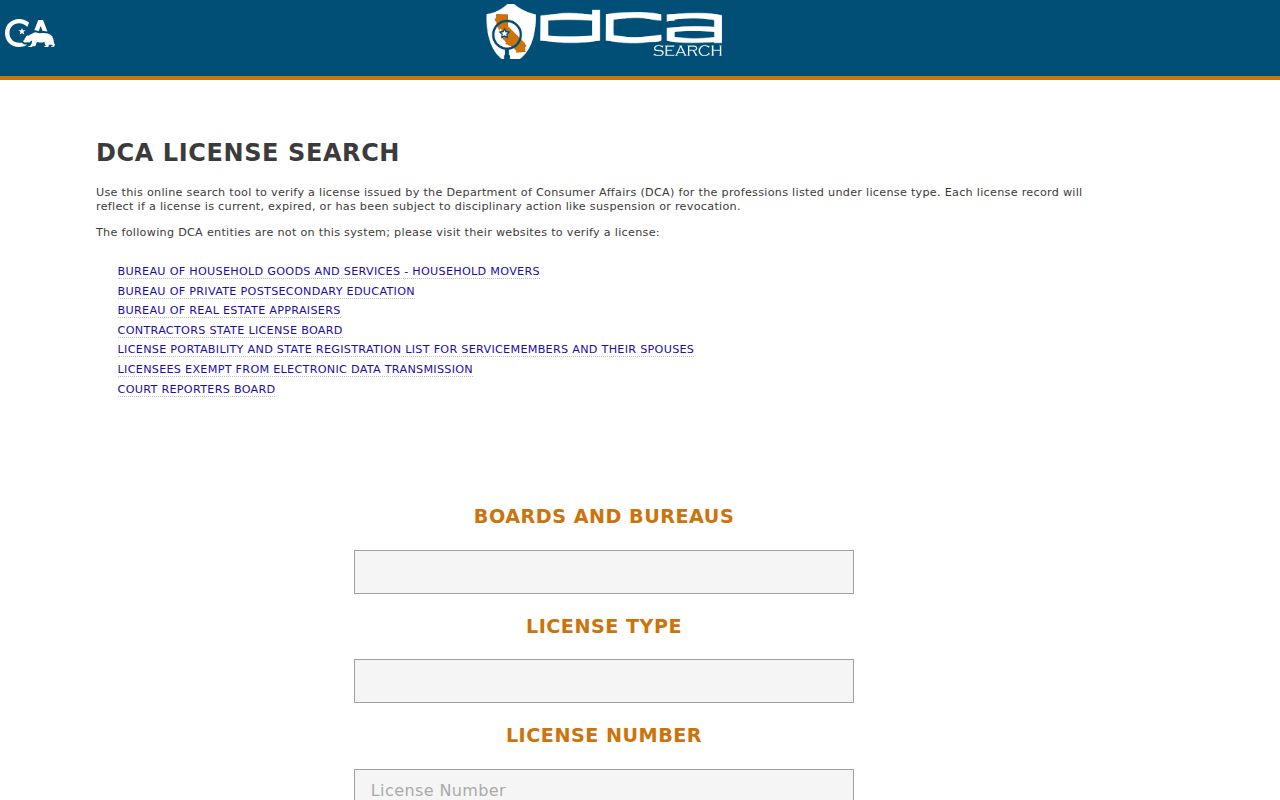
Board-specific fields vary, so a license result is strongest when matched with a second dated official record.
Kern County Resident Lookup Archives
Older questions sometimes need older sources. The Jack Maguire Local History Room at Beale Memorial Library offers a different kind of evidence for a Kern County resident lookup. The room sits on the second floor at 701 Truxtun Avenue in Bakersfield. Call 661-868-0771 before visiting. Nothing circulates. Holdings include Bakersfield directories dating to 1899, Kern telephone directories dating to 1940, yearbooks mainly from the 1960s and 1970s, newspapers, microfilm, and vertical files.
Newspapers can add an obituary, a move notice, or a school reference. Digitized Bakersfield Californian coverage runs from 1875 through 1977, with microfilm carrying it from 1978 to the present. Other Kern community titles have their own spans. The room also takes obituary and article research requests. A narrow request beats a broad one. Give a full or variant name, an approximate date, the locality, and a known relative rather than asking for everything about a person.
CPRA is a fallback for an identifiable, nonexempt agency record, not a command that a clerk perform identity research. Under Government Code §§7920.000 et seq., an agency usually answers within 10 calendar days. A 14-day written extension is allowed in unusual circumstances. Inspection is generally free. Copies may carry direct duplication charges. The California Attorney General's CPRA guidelines explain the deadlines, exemptions, and costs. CPRA cannot override vital, voter, court, juvenile, sealed, DMV, or Safe-at-Home limits.
- Ask the record custodian for a defined department, date range, address, case, or document type.
- Use the Kern county request channel for an identifiable county record, or the relevant city for an incorporated-city record.
- Keep the response, exemption citation, or no-record statement with the search notes.
- Correct a wrong record with the office that created or holds it; do not copy an error into a new list.
Kern County Resident Lookup Record Terms
Index language can make a name search sound more certain than it is. A docket is a running list of court events. An index is a finding aid. An image or instrument is the underlying filed record, released when the custodian allows it. A certified copy comes from a clerk or records office with a certification that it is a true copy. That is not the same as a screen result.
- Docket
- The court's chronological case event list, often called the register of actions in Kern court records.
- Index
- A searchable entry that points to a record and may show names, dates, classes, or numbers.
- Image or instrument
- The filed document itself, with language and parties that may not fit in the index.
- Certified copy
- An official copy marked or signed by the custodian for uses that require certification.
A Recorder search result can carry real substance. You may see a document number, recording date, page count, description, first grantor or grantee, and whether an image exists. In one instance a deed of trust ran 17 pages, while a simple deed took four. Image availability sometimes shows N/A instead. Copies come in person or by mail only. The Recorder takes no phone, fax, email, or web orders, so include the instrument number, recording year, party name, document type, return address, payment, and any envelope the office requires.
Kern County Resident Lookup Privacy Limits
Not every gap in a Kern County resident lookup is an accident. Some records are shielded on purpose. Safe at Home gives qualifying California participants a substitute address. It also provides mail forwarding under Government Code §§6205 to 6211. The program can shield government and voter records. Yet it cannot erase historical instruments that were already public. Keep expectations realistic about what a residents directory can show. DMV addresses, utility and delivery accounts, household members, renters, and protected voter identifiers never appear. They are not ordinary directory fields.
California offers another tool in 2026. The DROP program lets residents send deletion and no-sale requests to registered data brokers. It does not touch deeds or court records, though. When a record itself is wrong, contact the custodian and ask for the correction route. For labeling, trust precision over guesswork. A match may be described as a recorded party, named court party, assessed parcel, or registered entity agent. That label beats calling every hit a resident.
Lawful use. A Kern County name search is for personal, lawful research such as family history, reconnecting, civic curiosity, or checking a record tied to your own affairs. Do not use a result to stalk, harass, intimidate, or harm anyone.